
Five months after Tata Motors shifted its Nano plant to Gujarat, another Tata company has decided to move a project out of West Bengal. Tata Metaliks has scrapped its 500,000-tonne billet project, proposed to be built with an investment of Rs 700-800 crore

The Aam Aadmi Party (AAP) has strongly criticised the Enforcement Directorate (ED) raid and subsequent arrest of Punjab minister Sanjeev Arora, calling it a politically motivated act by the BJP-led central government. AAP leaders allege the BJP is misusing central agencies to suppress opposition voices and destabilise the AAP government in Punjab.
The death toll in the Vedanta power plant blast in Chhattisgarh's Sakti district has risen to 24, with one more worker succumbing to injuries. An investigation is underway to determine the cause of the explosion, which occurred in a steel tube carrying high-pressure steam.

A policy-related problem that urgently needs to be redressed is the 'miniaturisation' of projects.

Kerala's voters are sophisticated, educated, and unforgiving. They have once again made it clear that no government is entitled to remain in power. The Congress would do well to remember this, points out Ramesh Menon.

Following two blasts targeting the Eastern Dedicated Freight Corridor in Punjab, the Railways Ministry is intensifying security measures, including increased patrolling, expanded surveillance, and drone deployment, to safeguard railway infrastructure and prevent further disruptions.
The death toll from the April 14 blast at Vedanta's power plant in Chhattisgarh's Sakti district has risen to 21, with several others hospitalised. Investigations are underway to determine the cause of the explosion, with preliminary findings pointing to excessive fuel accumulation in the boiler furnace.
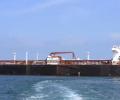
Despite ongoing tensions in West Asia, the successful arrival of the LPG carrier 'Nanda Devi' in Gujarat ensures a steady supply of liquefied petroleum gas to India, highlighting the country's efforts to secure its energy needs.
The movement has taken the shape of an unusual reverse migration, which officials and they themselves link directly to the Special Intensive Revision (SIR) of electoral rolls underway in West Bengal.
India's largest private port operator Adani Ports and SEZ (APSEZ) Ltd has emerged as the highest bidder for the West Bengal government's greenfield deep-sea port project at Tajpur in a neck-to-neck fight with JSW Group, a source said on Friday. APSEZ and Sajjan Jindal-led JSW Group were the only two entities that took part in the financial bid round, though there were more port and logistics majors who had expressed initial interest in the estimated Rs 7,000-crore project in Purba Medinipur district. "APSEZ is the highest bidder, offering a share of 0.25 per cent of gross revenue. "It was marginally higher than the second bidder who offered 0.23 per cent," a senior government official said, without wanting to be named.

A boiler explosion at a power plant in Chhattisgarh's Sakti district resulted in nine fatalities and fifteen injuries, prompting rescue operations and a government investigation.

Indian eateries are adapting to the LPG crisis by cutting menus, increasing prices, and switching to alternative fuels like coal, as LPG supplies are disrupted due to global events. State authorities are cracking down on hoarding and black marketing of LPG cylinders.

In a major counter-terror operation spanning three states, the Delhi Police has dismantled a Lashkar-e-Taiba (LeT) module comprising eight operatives, including seven Bangladeshi nationals who had illegally entered India and procured forged identity documents, an official said on Sunday.

Two senior Bihar government officers are under investigation after the Economic Offences Unit (EOU) discovered property documents, cash deposits, and valuable items allegedly disproportionate to their known income.

Makers of spirits, beer, and wine are working to identify new markets of growth as two of the industry's biggest liquor markets, Maharashtra and Telangana, remain embroiled in taxation and payment issues.

'The chief minister believes the poorest of the poor have the first right on government resources.'
In New Delhi, Agriculture Minister Sharad Pawar said the Centre is likely announce two packages -- one for the farmers in West Bengal and the other for poultry industry -- in the next 8-10 days.

The reason is because there aren't any screens for a large mass of Indians.

The cost of the war is being counted not in the corridors of power in Washington or Tehran, but in Firozabad's darkened furnace rooms, Howrah's idle casting sheds, and a barbershop in Kochi where the wait is suddenly, inexplicably, an hour long, notes Prem Panicker in his must read blog on the Iran War.
Indian American and Indian entrepreneurs believe the West Bengal government, which is projecting the state as an ideal investment destination for information technology and hi-tech industries, has to go a long way before it can become India's number one hub for such industries.

On the eve of Durga Puja in October 2008, industrialist Ratan Tata announced that Tata Motors would withdraw from the nearly completed Nano car plant in Singur, attributing the decision to Mamata Banerjee's anti-land acquisition movement, which he claimed had derailed what was meant to be a "groundbreaking project" -- the world's cheapest car.
But is there adequate demand for this abundance of IT office space set to hit the markets, especially with the three bandhs that took place in a single month, December?

West Bengal Chief Minister Mamata Banerjee claims a Bengali-speaking woman and her child were threatened in Delhi after an alleged assault. She urges Bengali migrant workers in BJP-ruled states to return to Bengal if harassed and questions the absence of central commissions in BJP-ruled states when atrocities occur.
In an open letter to the people of West Bengal, Ratan Tata said the citizens should decide whether they wanted education and jobs in the industrial and hi-tech sectors or 'want to stay as they are.' The letter said, 'The people of West Bengal, particularly the younger citizens, will need to express their views and aspirations as to what they would like to see West Bengal become in the years ahead.'
According to the survey, conducted by the Land Reforms Department, only 22,412 acres of vested non-agricultural land is available in the state for industrial and commercial use.

Exporters of gems and jewellery have said the free-trade agreement (FTA) has brought relief to their sector because this opens up the world's second-largest market and brings them on a par with China and Thailand, which face zero tariffs on shipments to Europe.

The TMC, in total, bagged 75.02 per cent of the votes cast, whereas the BJP got some 14.48 per cent votes, in the four assembly segments.

Reliance has small parcels of land in West Bengal for its agri-retail plan.
Israel will discuss the issue of homeland security with West Bengal which is reeling under the brunt of Maoist extremism.

Relaxation offered to infrastructure projects like transportation or terminal, township, logistics hub.
Economists and analysts are losing sleep over what would be the financial future of the state.
The policies that kept the Left Front in power for 30 years are proving major obstacles in the state's bid to industrialise.

'The BJP is keeping its options open and that the final decision is still tightly held.' 'That is consistent with the party's tendency to preserve suspense, avoid premature factional conflict, and use leadership selection as a way of resetting internal hierarchies.'

The West Bengal government on Monday introduced two amendment bills in the state Assembly to boost investments in the state.

Indian refiners are negotiating for additional crude cargoes from the US, Russia, and West Africa to ensure adequate supplies amid Middle East tensions. Refineries are maintaining normal processing rates and deferring maintenance to build reserves. The move comes as conflict impacts tanker movements through the Strait of Hormuz, a key energy transit route.

West Bengal was the second-most industrialised state in terms of value added and first in terms of number of factories and employment even in the mid-1960s. With a severe and long process of deindustrialisation, it lost its primacy.

'Nobody explained why. After that there was panic buying, there was hoarding -- and then nothing reached us.'
 © 2026 Rediff.com - Advertise with us - Disclaimer - Privacy Policy - Sitemap - Feedback - About us - Terms of use - Grievances